

Seeds Ireland
Pruning Saw | Kent & Stowe
- Regular price
- €19.99 EUR
- Regular price
-
- Sale price
- €19.99 EUR
- Unit price
- per
Couldn't load pickup availability
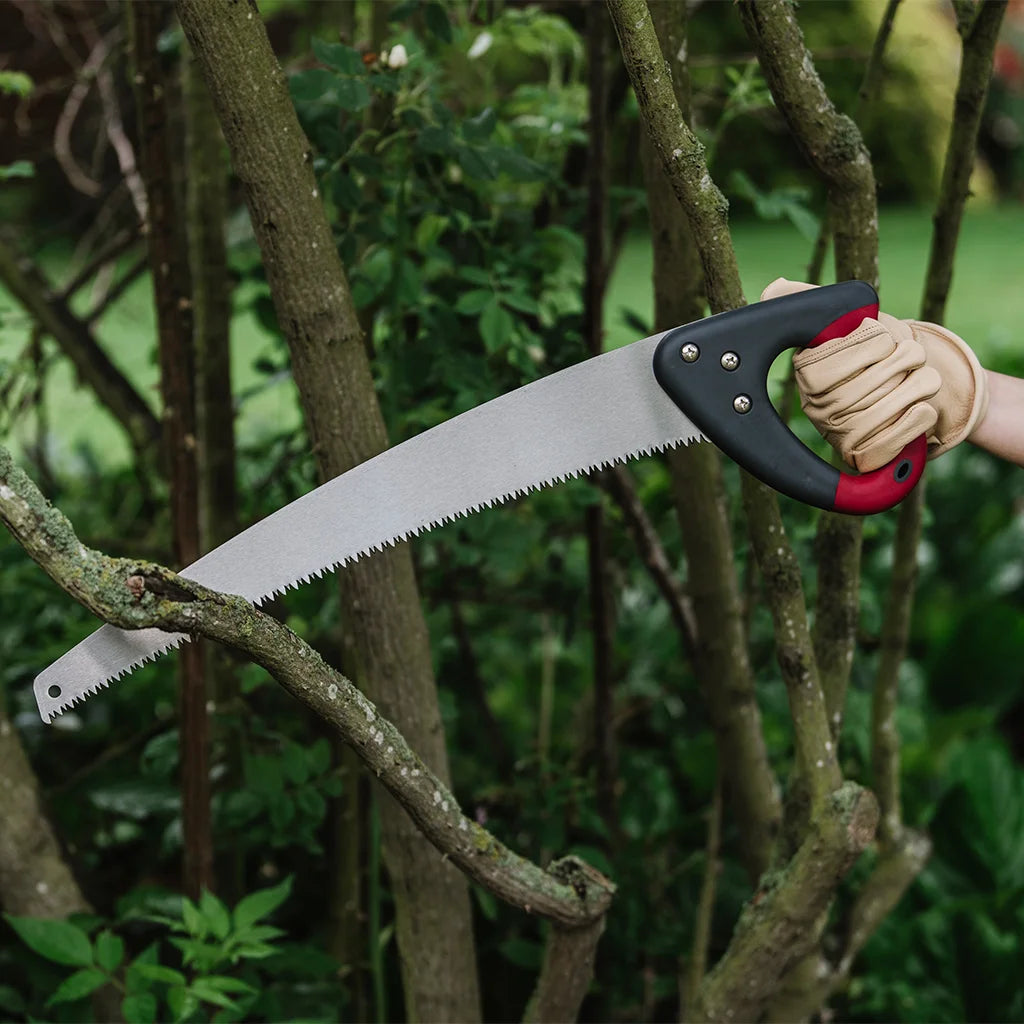
Designed for fast, efficient cutting, this Pruning Saw is the perfect tool for tackling large branches and mature wood with minimal effort. The precision-filed 460mm carbon steel blade features a curved profile and sharp triple-ground teeth, allowing it to glide smoothly through wet or green wood. Cutting predominantly on the back stroke, it delivers powerful performance while reducing strain on your hands and arms.
Built with a durable carbon steel blade and a comfortable rubber grip handle, this pruning saw offers excellent control and stability during use. Ideal for larger shrubs, trees and tough garden pruning jobs, it provides clean, effective cuts up to 100mm in diameter.
Key Features
-
Precision-filed 460mm carbon steel blade
-
Curved blade for fast, smooth cutting action
-
Triple-ground teeth for efficient cutting of wet or green wood
-
Cuts mainly on the back stroke to reduce effort
-
Comfortable rubber grip handle
-
Cutting diameter: 100mm
How To Use a Pruning Saw
A pruning saw is an essential tool for cutting large branches and mature wood that are too thick for loppers or secateurs. With its curved blade and sharp teeth, a pruning saw delivers fast, controlled cuts on both green and dry wood. Here’s how to use a pruning saw safely and effectively.
1. Choose the Right Branches
Pruning saws are ideal for branches between 30mm and 100mm thick. They’re perfect for pruning trees, large shrubs and removing older growth that requires more cutting power.
2. Position the Saw Correctly
Use the curved part of the blade to help the saw bite into the wood. This keeps the blade stable and gives a smoother cutting motion, especially on higher branches.
3. Start with Light, Short Strokes
Begin with a few gentle pulls to create a small groove. This prevents the blade from slipping and sets you up for a clean, controlled cut.
4. Let the Saw Do the Work
Most pruning saws cut on the back stroke, meaning you should pull rather than push. Use steady, even strokes and avoid forcing the blade. Sharp teeth will handle the work for you.
5. Support the Branch as You Finish
As the cut nears the end, support the branch with your free hand (if safe) to prevent tearing and splintering. A clean finish helps protect the plant from disease.
6. Use a Two-Step Cutting Method for Heavy Branches
For very large or high branches, use an undercut first:
-
Make a small cut underneath the branch.
-
Then complete the main cut from the top.
This prevents the bark from ripping as the branch falls.
7. Clean and Store Your Saw Properly
When finished, wipe the blade clean and dry. Resin or sap can be removed with a little oil. Store the saw in a dry place to protect the blade and handle.
Share